Data protection
Emirates ID OCR vs Identity Verification at the Visitor Desk
Understand the difference between reading text from an Emirates ID and verifying that an identity document is genuine.
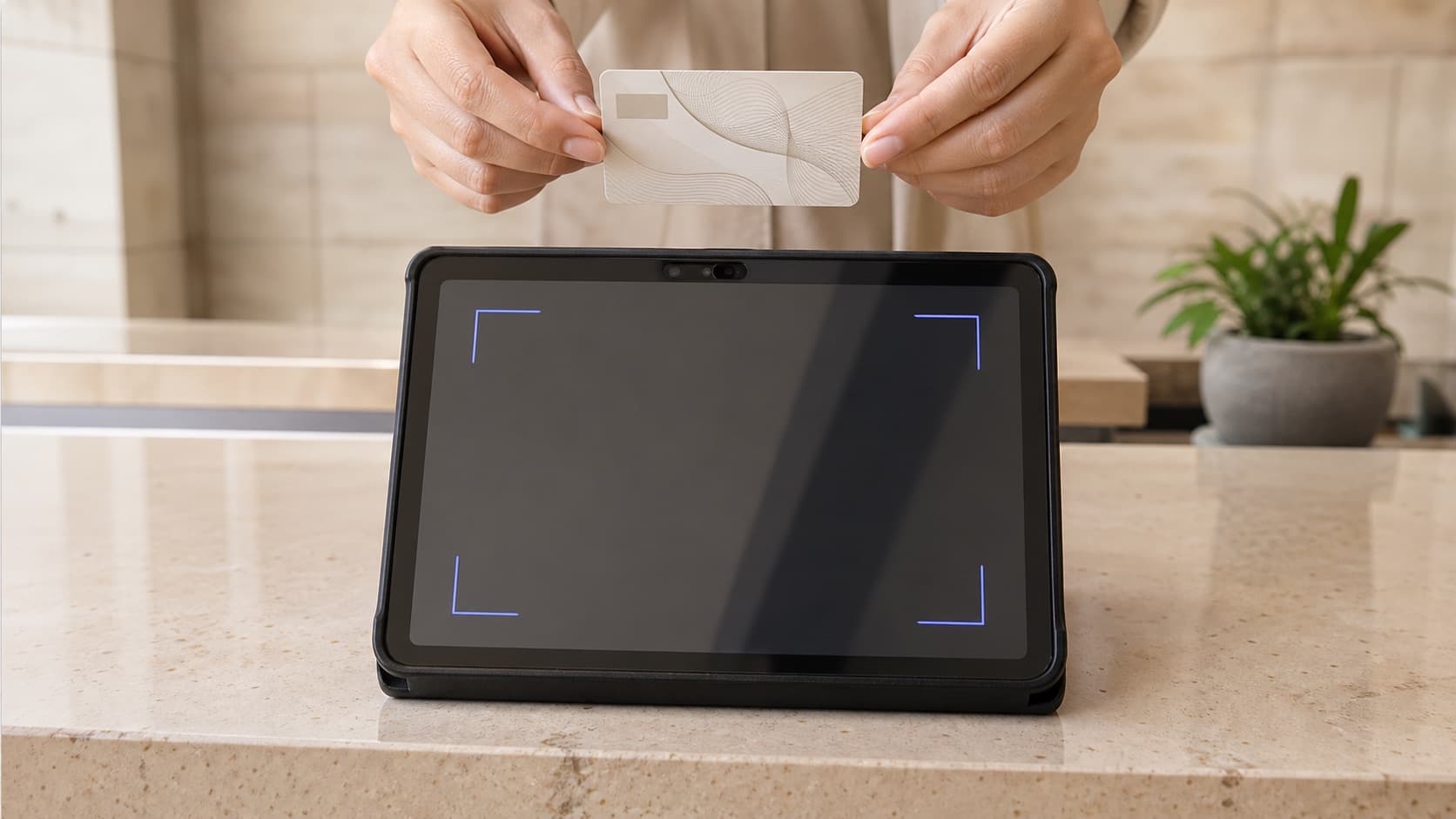
Emirates ID OCR can help staff enter visible card text. It is not the same as verifying the card, authenticating the visitor, or checking an authoritative government identity source.
Editorial notice
General information only—not legal, security, procurement, or professional advice. Details can change; verify current requirements with primary sources, vendors, and qualified advisers.
Read our editorial policyKey takeaways
- OCR extracts visible text; it does not prove that a document is genuine or current.
- Identity verification may require authoritative data sources, document-security checks, or specialist services.
- Repute uses on-device OCR as an entry aid and continues to support manual entry.
01
OCR and verification solve different problems
Optical character recognition reads text visible in an image and converts it into editable data. At a building desk, it can reduce repeated typing and transcription mistakes.
Verification asks a different question: whether the document is authentic, belongs to the person presenting it, remains valid, or matches an authoritative identity source. OCR alone cannot answer those questions.
02
How Repute uses Emirates ID OCR
On supported mobile devices, Repute Desk uses the Latin Google ML Kit text recognizer on the device to assist with reading the front of an Emirates ID. The image and recognized text are not sent to an LLM. Staff can review the result and use manual entry when scanning is unavailable or unsuitable.
Repute does not describe this workflow as government identity verification, UAE Pass authentication, biometric matching, or a guarantee that the presented card is genuine.
03
Questions for suppliers
Precise terminology prevents a building from relying on a feature for a security decision it was not designed to make.
- Does the requirement call for data entry, document reading, or identity verification?
- Who reviews the extracted information before it becomes a record?
- Where are temporary images processed and retained?
- What fallback exists when the card is damaged, obscured, or cannot be read?
- Does the supplier make a precise claim about what is and is not verified?
Sources
See the workflow