
Building operations
Visitor Checkout and Security Shift Handover
Keep unresolved visitor checkouts visible across security shifts while preserving staff attribution for every action.
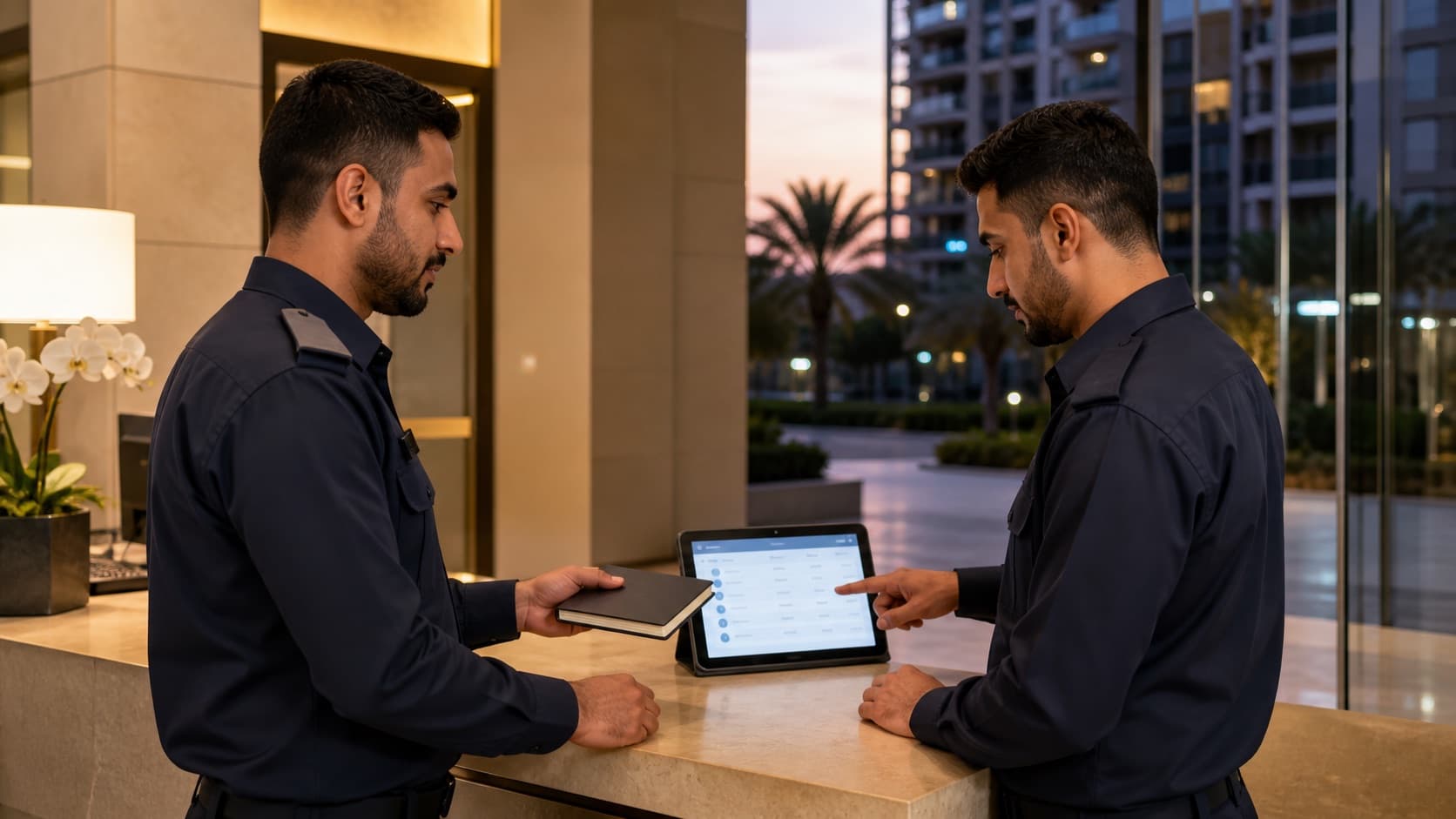
A building-level checkout queue supports real shift handover. The incoming guard can act on unresolved visits while the record still shows who created and who completed each event.
Editorial notice
General information only—not legal, security, procurement, or professional advice. Details can change; verify current requirements with primary sources, vendors, and qualified advisers.
Read our editorial policyKey takeaways
- The unresolved checkout queue belongs to the active building, not one guard's memory.
- Entry and checkout should retain separate staff attribution.
- A simple shift routine is more reliable than asking the next guard to infer what happened.
01
Why checkout crosses shifts
A visitor may arrive during one guard's shift and leave during another. If the first guard owns the checkout task personally, unresolved entries can disappear during handover even though the visitor is still associated with the building.
The operational queue should therefore be shared across the active building while each action retains the staff member who performed it.
02
A practical handover routine
The routine should be short enough to use every shift and specific enough that the incoming guard knows what needs attention.
- Review unresolved visitors before completing handover
- Confirm which visitors are known to remain on site
- Do not complete checkout only to clear the list
- Escalate records that exceed the organization's normal visit duration
- Keep entry and checkout attribution separate
03
How Repute handles the queue
Any active guard assigned to a building can complete checkout for an unresolved visit within twenty-four hours. This supports shift handover without rewriting the original entry attribution.
Older unresolved records remain in history but cannot be checked out. Management can then review the record without silently changing an old operational event.
See the workflow